
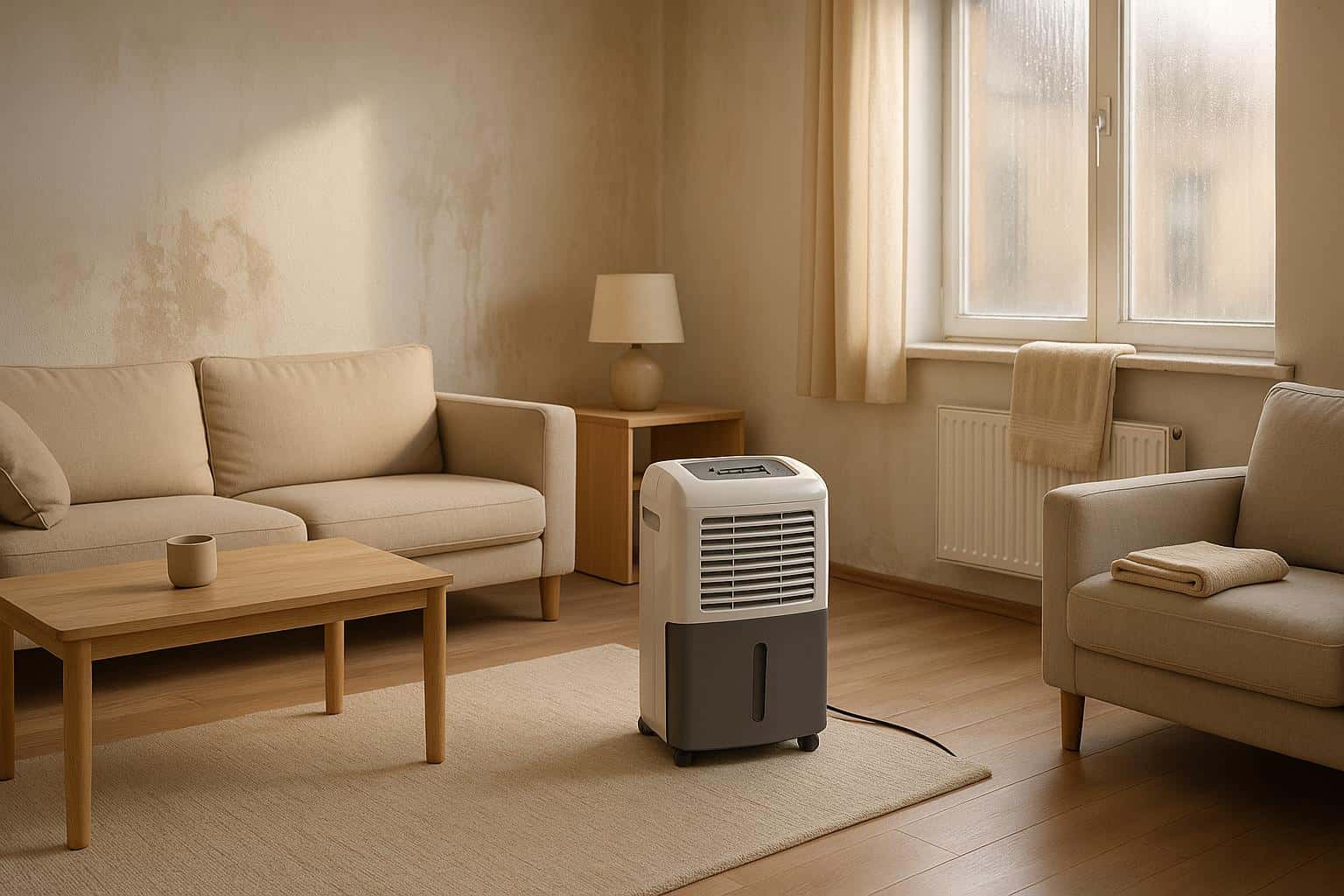
Dealing with water damage goes beyond removing visible water. The real challenge is managing the hidden moisture that increases humidity, leading to mold growth, structural damage, and poor air quality. Mold can develop within 24–48 hours if humidity exceeds 60%. Acting fast with professional tools like industrial dehumidifiers, air movers, moisture meters, and HEPA air scrubbers is key to effective restoration. This ensures proper drying, prevents long-term damage, and maintains a safe indoor environment. For residents in areas like Colorado Springs, partnering with certified experts ensures thorough restoration and peace of mind.
How to Dry a Building After a Flood: Desiccant Dehumidification Guide
Problems with High Humidity After Water Damage
Getting rid of standing water is just the first step after water damage. The real challenge lies in the moisture that seeps into building materials, creating high humidity levels that can linger for days or even weeks if not properly dealt with.
How Water Damage Leads to Persistent Humidity
When water floods your property, it doesn’t just stay on the surface – it gets absorbed into porous materials like drywall, insulation, and wooden structures. These materials hold onto water even after the visible moisture is gone. As this trapped water gradually evaporates, it increases indoor humidity, potentially causing further problems.
In Colorado, where the climate is usually dry, this sudden spike in moisture can be particularly tricky. Most buildings in the area aren’t designed to handle extended periods of high humidity, which makes drying out even harder. Even if you’re running fans and opening windows, moisture hidden in wall cavities or under flooring continues to release humidity into the air, prolonging the recovery process. This ongoing issue can significantly impact your home’s structure.
Risks of Mold and Structural Damage
Trapped moisture and rising humidity create the perfect conditions for mold growth and structural problems. When relative humidity indoors exceeds 60%, mold spores – always present in the air – can quickly multiply. At the same time, prolonged exposure to moisture weakens wood framing, causes drywall to soften or crumble, and reduces the effectiveness of insulation. Poor ventilation and warm temperatures can make these effects worse.
Metal components may start to rust, and flooring materials can warp or separate. Studies show that more than 60% of water-damaged homes develop mold if high humidity persists for more than 48 hours.
Take, for example, a case in Colorado Springs where a burst pipe flooded a home. The owner tried to dry the area with household fans and a small dehumidifier. Within 48 hours, mold began growing behind the walls, where moisture had soaked into the drywall and insulation. The homeowner ended up paying for costly mold remediation, air quality restoration, and the replacement of entire wall sections.
The Dangers of Hidden Moisture
One of the most challenging aspects of water damage is dealing with hidden moisture. Water can seep into places like wall cavities, under flooring, and behind baseboards – areas that are easy to overlook. This concealed moisture often leads to persistent musty odors and hidden mold growth.
Over time, hidden moisture can also cause surfaces to warp, doors to misalign, and paint or wallpaper to peel. Advanced tools like moisture meters and infrared cameras are essential for finding these hidden problem areas. Without professional equipment, pockets of moisture can go unnoticed, continuing to cause damage long after the initial flooding.
If left unaddressed, hidden moisture can lead to long-term issues like structural rot, permanent warping, and ongoing deterioration. What might start as a localized water problem can spread to areas that were never directly exposed, making repairs more expensive and complicated.
Solutions for Humidity Control and Air Quality Restoration
Restoring proper humidity levels and improving air quality requires specialized tools and constant monitoring. Professional restoration teams use advanced equipment to ensure thorough drying, prevent long-term damage, and maintain a healthy indoor environment.
Industrial Dehumidifiers and Air Movers
Industrial dehumidifiers are essential for removing moisture quickly, far beyond what standard household units can handle. In water damage restoration, two types of dehumidifiers are commonly used: desiccant dehumidifiers and low-grain refrigerant (LGR) dehumidifiers.
- Desiccant dehumidifiers: These units use adsorption to extract moisture and perform well even in low temperatures. They are particularly effective in maintaining relative humidity between 30–50% at around 68°F (20°C). They typically remove 0.7–1.1 liters of moisture per hour at this temperature.
- LGR dehumidifiers: These work by cooling the air to condense and remove moisture, with a higher capacity of 2.8–3.7 liters per hour at 68°F.
In drier climates like Colorado, desiccant dehumidifiers are often preferred for their reliability and consistent results.
Air movers play a critical role in speeding up the drying process. When strategically placed, they create even airflow across wet areas – walls, floors, and ceilings – helping to evaporate moisture, even in hidden or hard-to-reach spots.
Moisture Detection and Monitoring
Accurate moisture detection is the cornerstone of effective humidity control. Restoration experts use tools like moisture meters to measure water content in materials such as drywall, wood, and insulation. These readings establish baseline levels and track drying progress.
For hidden moisture, infrared cameras are invaluable. They detect temperature differences, revealing damp areas behind walls or beneath floors. Additionally, hygrometers monitor the air’s relative humidity in real time, ensuring it stays within the safe range of 30–50%. This continuous monitoring guarantees that drying is complete and no residual moisture remains.
While moisture detection focuses on drying, other equipment addresses air quality concerns.
Air Scrubbers for Removing Contaminants
During restoration, HEPA air scrubbers are used to clean the air by capturing airborne contaminants. These devices are highly effective, removing at least 99.97% of particles as small as 0.3 microns. They ensure that dust, mold spores, or other harmful particles released during the drying process do not compromise indoor air quality.
| Equipment Type | Primary Function | Key Benefits | Typical Capacity |
|---|---|---|---|
| Desiccant Dehumidifiers | Moisture removal through adsorption | Reliable at low temperatures | 0.7–1.1 L/hour at 68°F |
| Air Movers | Accelerate evaporation | Faster, even drying of surfaces | Varies by fan size |
| HEPA Air Scrubbers | Remove airborne contaminants | Captures 99.97% of particles | Varies by room size |
To ensure comprehensive restoration, professionals rely on a combination of these tools, along with continuous monitoring. Companies like Old World Restoration and Carpet Cleaning in Colorado Springs are equipped with these advanced solutions, offering 24/7 services to restore dry, safe, and healthy indoor conditions. Certified teams utilize dehumidifiers, air movers, and air scrubbers to tackle both moisture and air quality challenges effectively.
sbb-itb-401327a
Preventing Mold and Maintaining Good Air Quality
Once the initial restoration and drying process is complete, it’s essential to take further steps to ensure long-term safety and maintain healthy air quality. This involves managing humidity, removing damaged materials, and committing to regular upkeep.
Keeping Humidity at Safe Levels
Keeping indoor humidity below 60% is crucial to stopping mold from taking hold after water damage. This not only prevents mold spores from spreading but also helps maintain a comfortable living environment.
To monitor humidity levels effectively, use digital hygrometers. These affordable tools provide consistent readings and should be placed in multiple rooms, especially in areas impacted by water damage. Check these readings daily during the first few weeks after restoration and then weekly as conditions stabilize.
During times of high outdoor humidity – like summer storms or seasonal weather changes – keep windows and doors closed to prevent moisture from seeping inside. Use your HVAC system to maintain a steady indoor climate, as fluctuating humidity levels can speed up mold growth.
Removing Damaged Materials and Deep Cleaning
Managing air quality also means addressing any materials that were compromised by water. Items like drywall, insulation, carpets, and padding can trap moisture and harbor mold spores, even if they seem dry on the surface. Removing these materials is a critical step in reducing future mold risks. Restoration professionals often rely on tools like moisture meters and thermal imaging to pinpoint hidden damage that might not be immediately visible.
Once damaged materials are removed, deep cleaning becomes the next priority. Use HEPA vacuums and EPA-approved disinfectants to get rid of any lingering mold spores. For soft furnishings, consider professional cleaning services or discard items that can’t be thoroughly dried.
Regular Maintenance and Better Ventilation
To prevent mold from returning, ongoing maintenance is key. Regularly inspect plumbing for leaks, keep your HVAC system in good condition, and improve ventilation by installing exhaust fans where needed to avoid hidden moisture buildup.
The EPA also suggests opening windows briefly when weather conditions allow. This encourages air circulation and helps lower indoor humidity, even in typically dry climates.
For those in Colorado Springs, Old World Restoration and Carpet Cleaning offers services like air duct cleaning and regular moisture assessments. They also provide 24/7 emergency support to quickly address any new concerns, ensuring your home stays safe and mold-free over time.
Professional Restoration Services in Colorado Springs
Once moisture and air quality challenges are addressed, professional restoration services are essential to ensure a thorough and lasting recovery. Certified local experts, equipped with advanced tools, can help restore your property effectively while preventing long-term issues.
Why Certified Local Professionals Matter
The IICRC certification sets the standard for restoration services, ensuring technicians are trained in water damage restoration, structural drying, and mold remediation. This certification guarantees adherence to the latest safety protocols, the use of state-of-the-art equipment, and compliance with insurance requirements. These factors not only improve the quality of work but also make insurance claims smoother and more efficient.
Local professionals bring unique advantages to the table. Their familiarity with Colorado Springs’ specific climate, construction styles, and regulations ensures restoration work is tailored to the area’s needs. For example, Old World Restoration and Carpet Cleaning, a trusted name since 2017 with over 20 years of experience, offers personalized services rooted in local standards. Their deep understanding of local building codes, environmental regulations, and permitting requirements ensures that every project meets or exceeds regional expectations. This combination of credentials and local insight translates into reliable and high-quality restoration services.
Comprehensive Services Offered
Old World Restoration and Carpet Cleaning provides a full range of services to address water damage and humidity-related issues:
- Water damage restoration: Industrial-grade dehumidifiers and air movers effectively remove moisture.
- Mold remediation: Tackles existing mold and implements strategies to maintain healthy indoor air quality.
- Air duct cleaning: Removes contaminants spread through HVAC systems.
- Carpet cleaning: Uses truck-mounted equipment to extract moisture and contaminants from flooring.
- Tile and grout cleaning: Targets hidden moisture in hard-to-reach areas.
- Dryer vent cleaning: Ensures proper ventilation to prevent future humidity problems.
This all-encompassing approach means property owners don’t have to juggle multiple contractors. From the initial water extraction to final air quality improvements, everything is handled under one roof.
Insurance-Approved and Around-the-Clock Emergency Support
Mold can begin growing within 24–48 hours, making a quick response critical. Old World Restoration and Carpet Cleaning offers 24/7 emergency services, free estimates, and direct coordination with insurance providers. Water damage restoration costs in Colorado Springs typically range from $1,200 to $5,000+, which is often far less than the expense of dealing with unchecked mold or structural damage.
Conclusion: Key Points for Humidity Control
Managing humidity after water damage is crucial for safeguarding your health, protecting your property, and avoiding future problems. Mold can begin to develop in as little as 24–48 hours if humidity levels remain elevated, so acting quickly is essential.
The U.S. Environmental Protection Agency (EPA) advises keeping indoor relative humidity between 30% and 50% to prevent mold growth and protect building materials. Professionals in restoration services rely on specialized industrial equipment to maintain these levels, highlighting the importance of prompt action to minimize health risks and expenses.
Moisture that gets trapped in walls, floors, and ceilings poses a serious threat to your property’s structure. If not properly identified and removed, this hidden moisture can lead to structural damage, lingering odors, and poor indoor air quality.
Delays in addressing water damage only increase the risk of mold, worsen structural issues, and drive up restoration costs. Professional restoration teams use advanced tools to quickly lower indoor humidity and improve air quality, making early action the most practical and effective solution.
Certified local experts provide more than just drying services – they offer thorough solutions, including moisture detection, air quality improvement, insurance support, and continuous monitoring to ensure long-lasting results. For residents in Colorado Springs, turning to trusted professionals like Old World Restoration and Carpet Cleaning ensures swift humidity control and complete water damage restoration.
FAQs
Why is it critical to manage humidity right after water damage, and what happens if you wait too long?
Managing humidity right after water damage is crucial for safeguarding both your home and your health. When humidity levels rise, it sets the stage for mold to thrive, which can harm your property and trigger health problems like allergies or breathing difficulties.
Waiting too long to tackle the issue allows moisture to penetrate deeper into walls, floors, and furniture. This not only complicates the restoration process but also increases costs. Taking swift action helps prevent mold growth, keeps the air in your home clean, and shields your property from additional harm.
What tools are used to detect and remove hidden moisture after water damage?
Detecting and eliminating hidden moisture after water damage is crucial to avoid long-term problems like mold. This process often relies on specialized tools to ensure every damp spot is identified and addressed. Moisture meters are key for measuring moisture levels in walls, floors, and ceilings, providing precise readings. Meanwhile, infrared cameras can pinpoint damp areas by highlighting temperature differences, often revealing moisture trapped beneath surfaces. To effectively dry these areas, dehumidifiers and air movers work together to remove moisture and restore normal humidity levels.
Using the right tools is essential to thoroughly address hidden moisture, safeguard your property, and maintain healthy air quality. If you’re dealing with water damage, consider reaching out to professionals who have the equipment and expertise to handle the restoration process effectively.
What steps can homeowners take to maintain safe indoor air quality and prevent mold growth after water damage restoration?
After dealing with water damage, keeping humidity in check is key to ensuring safe indoor air quality and avoiding mold growth. To achieve this, use dehumidifiers and maintain proper ventilation to reduce moisture levels. It’s also a good idea to routinely check damp-prone areas like basements and bathrooms for any signs of leftover moisture or mold.
If you’re looking for a more comprehensive solution, professional mold remediation services can help restore air quality and ensure your home stays safe and comfortable. Tackling these problems quickly can protect both your property and your health from the risks associated with mold exposure.
Related Blog Posts
- 7 Warning Signs of Water Damage in Your Home
- How to Prevent Mold After Flooding: A Step-by-Step Guide
- Emergency Water Damage: First 24 Hours Response Guide
- Ultimate Guide to Year-Round Mold Prevention


