

Dry winters in Colorado increase wildfire risks, even with snow on the ground. Protecting your home starts with fire-resistant materials for roofs, siding, and landscaping. These materials reduce the chance of ignition from embers or flames, which are the primary causes of wildfire damage to homes. Key takeaways include:
- Roofing: Use Class A fire-rated materials like metal, clay tiles, or fiberglass asphalt shingles. Avoid untreated wood roofs, which are highly flammable.
- Siding: Opt for non-combustible options like fiber cement, stucco, or stone. Maintain a 6-inch clearance between the ground and siding to reduce ember risks.
- Landscaping: Replace flammable mulch with gravel or rock. Use fire-resistant plants and maintain defensible space zones around your home.
Colorado’s new Wildfire Resiliency Code, effective July 2025, mandates fire-resistant materials for new construction in high-risk zones. Regular upkeep, like clearing debris from gutters and roofs, is critical. For homes affected by fires, professional restoration services can help repair damage and ensure compliance with safety standards.
ReBuilding after CO fires: Here’s some great details!
sbb-itb-401327a
What Are Fire-Resistant Materials and Why They Matter
Fire-resistant materials are specially designed building products that meet strict safety standards to resist embers, radiant heat, and flames. For homes in Colorado, these materials are particularly important due to the state’s wildfire risks. To qualify as fire-resistant, a material must have a flame spread index of 25 or less and must not sustain combustion during a 30-minute test.
The term structural ignitability is key to understanding how homes survive wildfires. The Colorado State Forest Service explains, "The two primary determinants of a home’s ability to survive a wildfire are the structure’s ignitability and the quality of the surrounding defensible space". Essentially, the materials used in your roof, siding, and the immediate area around your home can be the deciding factor between survival and destruction.
Colorado’s dry winters make fire-resistant materials even more critical. Winter wildfires spread quickly due to high winds and low humidity, even when snow is absent. In response to the growing wildfire threat, the City of Louisville implemented Ordinance 1891 (series 2025). This Fire Hardening Code requires Class A materials for new construction and major repairs, aiming to prevent fires from jumping between structures. Understanding how these materials work and their role in protecting homes during winter is essential.
How Fire-Resistant Materials Work
Fire-resistant materials protect homes by employing both physical and chemical defenses. Some materials cool the fuel source through endothermic reactions that release water vapor or carbon dioxide. Others form a tough, carbon-based char layer that acts as a shield, making it extremely difficult for flames to penetrate.
One advanced solution is intumescent coatings. When exposed to heat, these coatings expand, creating an insulating barrier beneath a protective char layer. This mechanism helps shield your home from extreme heat. Another key feature involves metal mesh screens with 1/8-inch or smaller openings. These screens are installed over vents to block wind-driven embers from entering attics or crawlspaces, where debris could ignite.
Testing ensures these materials perform as intended. For example, Class A roof coverings, evaluated under ASTM E108 or UL 790 standards, are built to withstand severe fire exposure. They’re also designed to prevent "flying brands" – burning embers that could ignite nearby structures. Such features are especially important during Colorado’s dry, windy winters, where wildfire risks are heightened. These mechanisms highlight how fire-resistant materials provide robust protection and directly tie into winter safety strategies.
Fire-Resistant Materials for Winter Safety
Colorado winters bring a dangerous mix of dry vegetation, low humidity, and strong winds, creating ideal conditions for wildfires to spread rapidly. Fire-resistant materials play a crucial role in slowing or preventing the spread of flames between buildings. As the City of Louisville notes, "Fire resistant materials enhance safety by making it more difficult for fire to spread quickly between buildings".
The most critical areas for fire defense are the structure itself and the 0–5 foot perimeter around it, known as Zone 1. This zone is where fire-resistant materials can have the greatest impact. Winter-specific hazards, such as dry leaves accumulating in gutters or windblown debris on roofs, can act as ignition points. To strengthen your home’s defense, pair fire-resistant materials with regular maintenance. For example, install gutter guards and opt for two-pane tempered windows. Replace wood fencing near your home with metal or stone, use metal gutters instead of vinyl, and maintain at least 6 inches of vertical clearance between the ground and your siding.
Best Fire-Resistant Materials for Roofing, Siding, and Landscaping
The materials you choose for your roof, siding, and landscaping can make all the difference when it comes to wildfire safety. As the Town of Vail emphasizes: "The single most important factor in home construction is the roof covering material". Your roof, being the largest horizontal surface, is especially vulnerable to wind-blown embers, so prioritizing fire-resistant options is crucial.
Class A Fire-Rated Roofing Materials
A fire-resistant roof is the cornerstone of a safer home, especially in wildfire-prone areas like Colorado. Class A fire-rated roofing materials provide the highest level of fire protection, with a flame spread rating between 0 and 25. Among the top choices:
- Metal roofing: Not only does it resist fire effectively, but it also handles heavy snow loads with ease.
- Clay or concrete tiles and slate: These materials offer natural heat resistance and durability.
- Fiberglass-based asphalt shingles: A budget-friendly option that still delivers solid fire protection.
For those who prefer the look of wood, synthetic composite roofing provides a safer alternative by mimicking wood aesthetics while minimizing fire risks. On the other hand, untreated wood roofs, such as cedar shakes, are highly flammable. In fact, Vail banned new wood shake installations in 2007, and many insurers refuse to cover homes with these roofs in fire-prone areas.
To further enhance protection, keep gutters and roof surfaces free of debris after winter storms. Installing metal mesh on vents can also help block embers.
Fire-Rated Siding for Colorado Homes
When it comes to siding, non-combustible materials are your best bet. Options like brick, stone, rock, and stucco offer excellent fire resistance. Fiber cement siding, such as James Hardie products, is another highly recommended choice, as it remains stable even under extreme heat. Steel siding offers similar durability and fire resistance, making it a strong contender for Colorado’s challenging weather conditions.
While vinyl siding is harder to ignite, it’s not ideal for fire protection since it can melt or fall away when exposed to intense heat. To maximize safety, use fire-resistant materials from the ground level all the way up to the roof overhang. Maintain at least six inches of vertical clearance between the ground and your siding to reduce the risk of embers igniting the structure. Additionally, enclosing roof eaves with fire-resistant materials and separating wooden attachments, like fences, from the siding using metal or masonry barriers can further enhance your home’s defenses.
Fire-Resistant Landscaping Options
Your landscaping choices play a critical role in wildfire defense. Creating defensible space around your home involves dividing the area into three zones: Zone 1 (0–5 feet), Zone 2 (5–30 feet), and Zone 3 (30–100 feet).
- Zone 1: Replace wood mulch with non-flammable materials like pebbles, gravel, or decorative rock to reduce the chance of embers igniting near your foundation. Opt for plants with high moisture content and low resin levels. Deciduous plants, such as Aspen, are generally safer than conifers, as their leaves contain more water and lack the flammable resins present in junipers and pines.
- Zone 2: Native Colorado plants with high fire resistance are ideal. Look for species rated 8, 9, or 10 on the flammability scale, where 10 is the least flammable. Examples include Nodding Onion (Allium cernuum) and Prickly Pear (Opuntia spp.), both rated 10. For turf, Kentucky Bluegrass and Buffalograss are excellent fire-resistant options.
- Zone 3: Space trees at least 30 feet apart to prevent crown fires from spreading. Prune lower branches up to 10 feet off the ground to minimize fire risks.
Regular maintenance is key – keep these zones clear of debris and ensure your irrigation systems are functioning to maintain plant hydration. A plant’s moisture content is the most critical factor in determining its fire risk.
Comparing Fire-Resistant Materials for Your Home
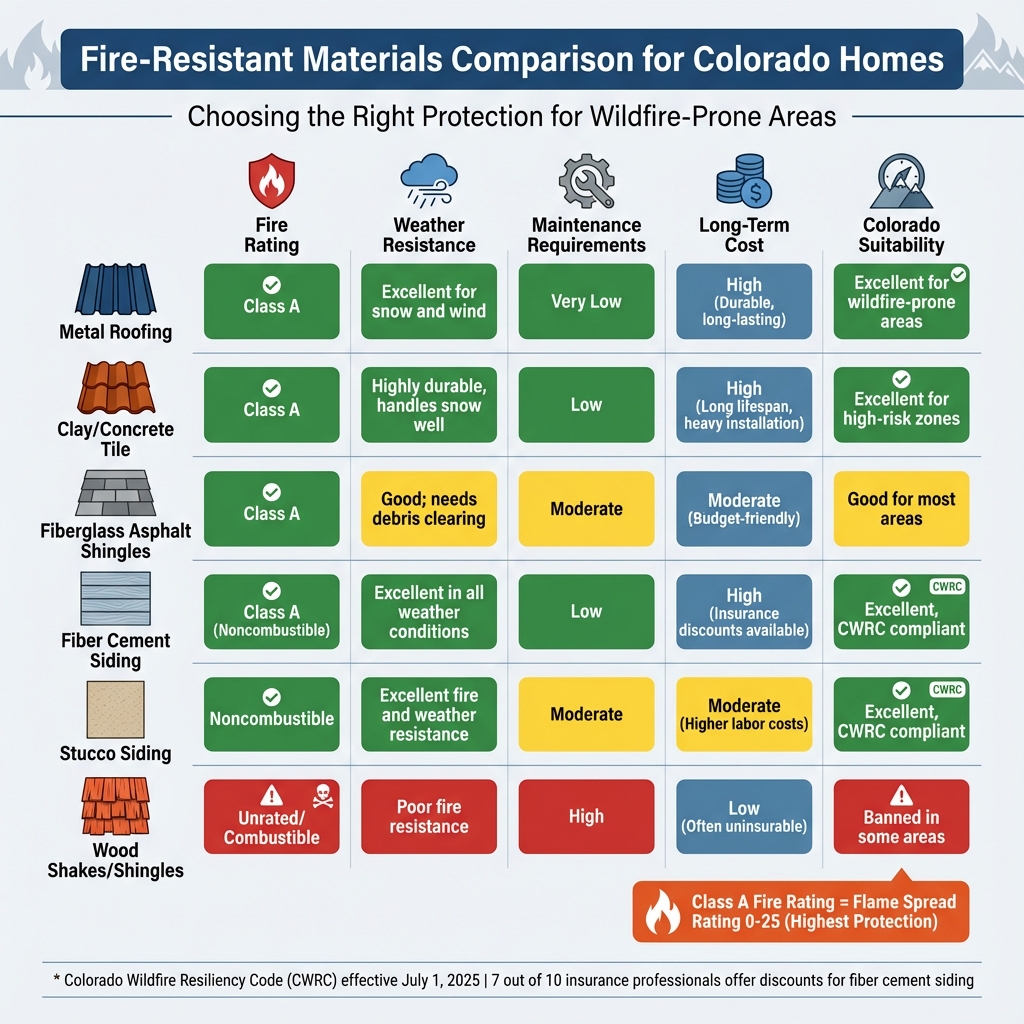
Fire-Resistant Building Materials Comparison for Colorado Homes
Fire-Resistant Material Comparison Table
When selecting fire-resistant materials for your Colorado home, it’s essential to weigh factors like fire ratings, cost, maintenance, and how well they handle the state’s tough winters. For instance, Class A fire-rated materials, with a flame spread rating between 0 and 25, offer the highest level of fire resistance. However, their cost, upkeep, and durability under Colorado’s specific conditions can vary significantly.
Below is a comparison of popular roofing and siding materials to help you make an informed decision based on your budget, maintenance preferences, and location. Interestingly, 7 out of 10 insurance professionals may provide discounts for homes with fiber cement siding, which could help offset higher upfront costs.
| Material | Fire Rating | Weather Resistance | Maintenance Requirements | Long-Term Cost | Colorado Suitability |
|---|---|---|---|---|---|
| Metal Roofing | Class A | Excellent for snow and wind | Very Low | High (Durable, long-lasting) | Excellent for wildfire-prone areas |
| Clay/Concrete Tile | Class A | Highly durable, handles snow well | Low | High (Long lifespan, heavy installation) | Excellent for high-risk zones |
| Fiberglass Asphalt Shingles | Class A | Good; needs debris clearing | Moderate | Moderate (Budget-friendly) | Good for most areas |
| Fiber Cement Siding | Class A (Noncombustible) | Excellent in all weather conditions | Low | High (Insurance discounts available) | Excellent, CWRC compliant |
| Stucco Siding | Noncombustible | Excellent fire and weather resistance | Moderate | Moderate (Higher labor costs) | Excellent, CWRC compliant |
| Wood Shakes/Shingles | Unrated/Combustible | Poor fire resistance | High | Low (Often uninsurable) | Banned in some areas |
From the table, fiber cement siding stands out as one of the safest choices. Products like Hardie® siding, for example, boast a flame spread index of 0 when tested under ASTM E84 standards. This makes it a top-tier solution for fire safety. Ernest Lopez from GS Exterior Experts emphasizes this point:
"We’ve already helped thousands of residential homes across Colorado upgrade from traditional wood or vinyl siding to Hardie® siding as part of fire mitigation efforts. We try to educate every homeowner… about the importance of protecting their biggest investment, which includes choosing durable products".
Additionally, Colorado’s new Wildfire Resiliency Code (CWRC) will come into effect on July 1, 2025, mandating fire-resistant materials for new construction in Wildland-Urban Interface zones. By April 1, 2026, all applicable municipalities must adopt these standards. Be sure to confirm your home’s zone classification to ensure compliance with these regulations and enhance your home’s protection.
Fire-Resistant Materials and Professional Restoration Services
Fire and Smoke Damage Restoration Services
Using fire-resistant materials can help protect a home’s structure, making it easier for restoration experts to clean and deodorize instead of completely rebuilding. Features like Class A fire-rated roofing and non-combustible siding reduce the chances of ignition, working hand-in-hand with professional restoration services to safeguard homes in Colorado both before and after a fire.
Old World Restoration and Carpet Cleaning has been a trusted name in El Paso County since 1977, offering 24/7 emergency fire and smoke damage restoration services across areas like Colorado Springs, Pueblo, Black Forest, Monument, Manitou Springs, and Fort Carson. Fire and smoke damage can worsen in the days following a fire, making a quick professional response essential to avoid permanent damage.
One key challenge restoration teams face is addressing not just fire damage but also water damage caused by firefighting efforts. If water isn’t removed within 48 to 72 hours, mold and bacteria can start to grow. Old World Restoration provides same-day emergency services that include fire damage cleanup and water extraction. Using truck-mounted equipment and methods approved by insurance providers, they focus on fully restoring homes as quickly as possible.
This coordinated effort ensures the home is ready for a thorough evaluation of any remaining vulnerabilities.
Working with IICRC-Certified Restoration Experts
While fire-resistant materials are essential, professional restoration services bring expertise that maximizes their benefits. IICRC-certified experts play a vital role in recovery plans, assessing the Home Ignition Zone (HIZ) to pinpoint potential risks. For instance, they identify hazards like wooden fences that can act as fire bridges or areas where embers might accumulate. They also recommend replacing these weak points with fire-resistant materials that meet Colorado’s building codes.
Local efforts highlight the importance of this work. In October 2024, the Colorado Springs Fire Department teamed up with the Manufacturing Industry Learning Lab Training Center in School District 3 for a hands-on educational project. Under the guidance of CSFD Deputy Fire Marshal Kris Cooper, trade students constructed four mini-homes using various fire-resistant materials and tested their resilience against flames. Cooper emphasized the value of this learning experience:
"That makes them a better contractor should they choose to go down that road in the future they understand as they build at home what those vulnerabilities are and what they need to do to build a great product for our community and keep future families safe".
This initiative showcases how local experts tailor their knowledge to Colorado’s unique fire risks and building standards.
With over 45 years of experience, Old World Restoration understands the challenges Colorado homeowners face, from wildfires to frozen pipes during harsh winters. Their all-in-one approach combines restoration and cleaning services, helping homeowners repair damage while also implementing defensible space strategies. They assist with insurance claims and ensure all rebuilding efforts meet current fire safety standards. Backed by IICRC certification, state-of-the-art equipment, and an A+ BBB rating, they deliver comprehensive home restoration services tailored to Colorado’s needs.
Protecting Your Colorado Home This Winter
Winters in Colorado bring more than just snow and cold – they also come with fire risks that linger all year due to high winds and low humidity. Keeping your home safe requires more than just a single precaution; it’s about creating layers of protection, starting with your home’s structure and extending outward into your property. For starters, consider using Class A fire-rated roofing materials like metal, clay, or slate, paired with non-combustible siding such as stucco, brick, or stone. These materials act as a strong barrier against flames, helping to protect your home’s interior.
Pay extra attention to areas where embers can sneak in, like attic vents, soffit vents, and foundation openings. These should be covered with 1/8-inch metal wire mesh to block wind-driven embers, which can travel miles from an active fire. Additionally, focus on the first 5 feet around your home. Replacing flammable landscaping materials with rock, gravel, or concrete hardscaping can prevent flames from bridging the gap to your structure.
Fire-resistant materials are only effective with regular maintenance. Keep your gutters, roofs, and decks clear of debris like pine needles and leaves throughout the winter. Upgrading to multi-paned tempered glass windows not only improves insulation but also adds a layer of protection against flying debris. Routine upkeep is essential for minimizing risks and avoiding costly damage later.
Even with the best precautions, fires can still happen. When they do, professional restoration is crucial. Old World Restoration and Carpet Cleaning, a trusted local company, offers 24/7 emergency fire damage and water extraction services. Their IICRC-certified teams specialize in cleaning up fire damage and addressing water damage from firefighting efforts, preventing secondary problems like mold growth and frozen pipes during the winter recovery process.
With over 45 years of experience, Old World Restoration has been serving communities like Colorado Springs, Pueblo, Black Forest, Monument, Manitou Springs, and Fort Carson since 1977. Their truck-mounted equipment, insurance-approved methods, and same-day emergency service ensure your home is restored quickly and thoroughly. By combining durable materials with expert restoration services, they help Colorado homeowners build and maintain fire resilience throughout the year. From preparation to recovery, you can count on their team to keep your home protected.
FAQs
What are the best fire-resistant roofing materials for Colorado winters?
For Colorado’s tough winters, it’s wise to go with Class A-rated fire-resistant roofing materials. Options like metal roofing, concrete tiles, and clay tiles stand out for their durability and ability to resist fire. Other solid choices include slate and certain high-temperature synthetic membranes, which add an extra layer of safety against fire risks.
Picking the right roofing material is crucial, especially with the dry, gusty conditions that often accompany Colorado winters. To make sure your roof is up to fire safety standards and installed correctly, it’s best to work with a trusted professional.
What are fire-resistant materials, and how can they protect homes during Colorado’s dry winters?
Fire-resistant materials such as brick, stone, stucco, concrete, gypsum, and Class A or B siding serve as non-combustible barriers. They work to slow down the spread of heat and delay ignition, making it more difficult for embers to ignite your home – especially during Colorado’s dry winters.
Using these materials helps lower the risk of fire, offering a layer of crucial protection for your property. They also provide firefighters with valuable extra time to respond during emergencies. Adding fire-resistant materials to your home can make a big difference in keeping it safer and more durable during those harsh, dry winter months.
How can I make my landscaping more fire-resistant for Colorado winters?
To make your landscape more resistant to fire, start by creating a defensible space around your home. In the first 0–5 feet closest to your house, clear away anything flammable – think dry vegetation, firewood stacks, or piles of leaves. Replace these materials with non-combustible options like gravel, rocks, or pavers. Moving outward, maintain a 30-foot buffer zone by removing dead plants, mowing the grass frequently, and trimming tree branches so they’re at least 10 feet off the ground and spaced 30 feet apart.
Choose plants that are less likely to catch fire, often referred to as "Firewise" plants, and make sure they’re drought-resistant and well-watered to minimize dry debris. Avoid using organic mulch near your home, as it can ignite easily. Instead, go for materials like rock or gravel. Adding features such as stone walkways, fire-resistant fencing, or retaining walls can also help slow down or block the spread of flames, offering extra protection.
Regular upkeep is key. Clear out fallen leaves, trim dead branches, and keep your irrigation system in good working order to ensure plants stay hydrated. These straightforward actions can dramatically lower the risk of wildfire damage to your property.


