
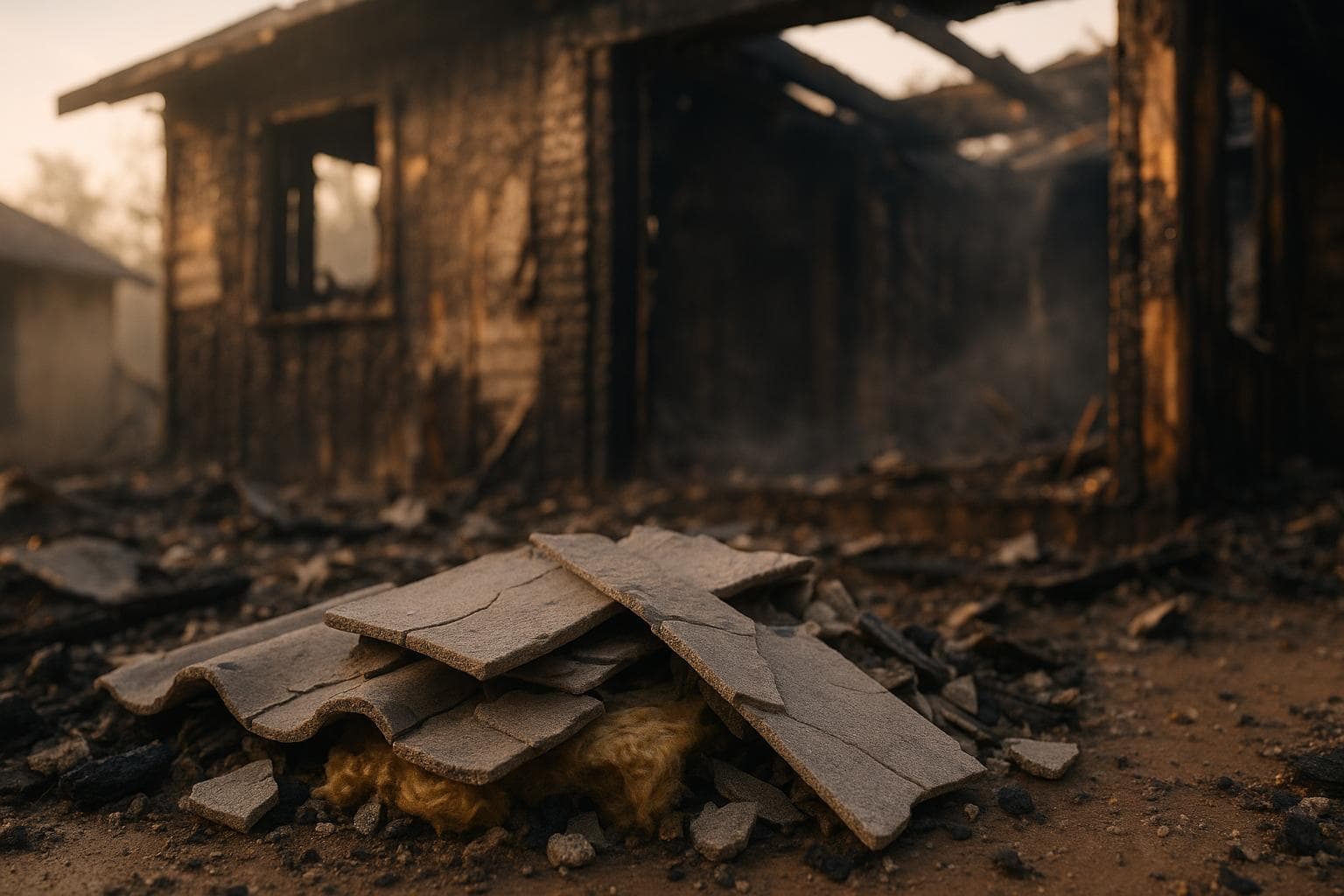
When a fire damages a building, the danger doesn’t end with the flames. Asbestos exposure becomes a major hidden risk, especially in older properties. Fires can disturb asbestos-containing materials, releasing microscopic fibers into the air that can cause severe health issues like mesothelioma, lung cancer, and asbestosis. Here’s what you need to know:
- What is asbestos? A heat-resistant material used in older construction (before 1990). Safe when undisturbed, but dangerous when airborne.
- How fire increases risks: Heat and debris release asbestos fibers into the air, spreading contamination far beyond the fire site.
- Health risks: Inhaled fibers can lead to deadly diseases with symptoms that may take decades to appear. No exposure level is safe.
- What to do after a fire: Assume all debris is hazardous. Hire certified asbestos inspectors to test and manage cleanup safely.
Key takeaway: If your property was built before 1990 and has fire damage, professional asbestos testing is critical to protect your health. Don’t handle debris yourself – leave it to certified experts.
Asbestos & Fire: Could a fire in a building with asbestos expose people nearby to asbestos?
Health Risks of Asbestos Exposure
Understanding the dangers of asbestos exposure is especially important when dealing with fire-damaged properties. Fires can release asbestos fibers into the air, leading to serious health problems that may not surface until decades later.
Respiratory Diseases Linked to Asbestos
When asbestos fibers are inhaled, they can become embedded in lung tissue, causing scarring and inflammation. These fibers are classified as a known human carcinogen by the U.S. Department of Health and Human Services, the U.S. Environmental Protection Agency (EPA), and the International Agency for Research on Cancer. Exposure to asbestos is associated with several severe respiratory illnesses, including mesothelioma, lung cancer, and asbestosis.
- Mesothelioma is a rare, aggressive cancer that affects the lining of the lungs, heart, or abdomen.
- Lung cancer caused by asbestos exposure is particularly lethal. It’s estimated that asbestos contributes to 100,000–140,000 lung cancer deaths globally and accounts for 5–7% of all lung cancers.
- Asbestosis involves extensive lung tissue scarring, leading to progressive breathing difficulties.
One of the most concerning aspects of asbestos-related diseases is their long latency period. Symptoms can take anywhere from 10 to 40 years to emerge. Between 1940 and 1980, approximately 27 million American workers were exposed to asbestos, and studies indicate that up to 20% of those exposed may eventually develop related illnesses. Alarmingly, there is no safe level of asbestos exposure – even minimal contact can pose risks.
Fire-Damaged Properties: A Special Concern
Fire-damaged buildings carry heightened asbestos risks. Normally, asbestos-containing materials are safe when left undisturbed. However, the intense heat from a fire can cause these materials to crack, become brittle, and release hazardous fibers into the air.
Michelle Whitmer, an asbestos expert with The Mesothelioma Center at Asbestos.com, explains:
"As wildfires burn through older homes and buildings, asbestos-containing materials become brittle and damaged… When fire damages old building materials, it can release asbestos fibers, which are microscopic and easily inhaled."
Asbestos fibers can endure temperatures as high as 1,600°F, meaning they often remain intact even after a fire is extinguished. Water used to combat the flames can spread these fibers further across the property. Activities like clearing debris or even walking through affected areas can disturb asbestos-containing materials and release more fibers into the air.
If you’ve been exposed to asbestos and notice increasing shortness of breath, it’s critical to consult a healthcare provider. Smoking can worsen the retention of asbestos fibers in the lungs, speeding up the progression of related diseases.
Given these risks, asbestos testing should be a priority after any fire incident.
Finding and Testing for Asbestos After a Fire
After a fire, the risks associated with asbestos increase significantly, making it essential to test for its presence as soon as possible. This involves identifying materials that might contain asbestos and having certified professionals conduct proper testing. Such testing is key to planning safe and effective remediation.
Signs That a Property May Contain Asbestos
The age of your property can provide a strong clue about the likelihood of asbestos. Buildings constructed or renovated before 1990 are more prone to having asbestos-containing materials. These materials often include insulation around pipes and in attics, floor and ceiling tiles, textured paints, patching compounds, roofing materials, and siding shingles. After a fire, these substances can crack, crumble, or become brittle, releasing harmful fibers into the air.
Because asbestos fibers are microscopic and materials containing asbestos appear similar to those without, professional testing is the only way to confirm their presence.
Role of Certified Asbestos Inspectors
If you suspect asbestos in your property, testing by certified professionals is essential. This is the most reliable way to determine if asbestos is present, particularly in fire-damaged areas. The U.S. Environmental Protection Agency (EPA) underscores this necessity:
"The only way to be sure whether a material contains asbestos is to have it tested by a qualified laboratory. EPA only recommends testing suspect materials if they are damaged (fraying, crumbling) or if you are planning a renovation that would disturb the suspect material. Samples should be taken by a properly trained and accredited asbestos professional (inspector)."
Certified asbestos inspectors follow strict federal and state guidelines to ensure the safety of homeowners, tenants, and workers. Their expertise is especially important after fire damage, as they can identify hazards that might go unnoticed by untrained eyes.
The inspection process starts with a consultation and site assessment. Inspectors discuss any concerns, review the property’s history, and look for visible signs of damage in materials that might contain asbestos. They focus on high-risk areas, such as older insulation, ceiling tiles, crumbling drywall, and outdated roofing materials.
Using protective equipment, inspectors collect samples from these areas and send them to NVLAP-accredited laboratories for detailed analysis. The results include information about fiber concentrations, types of fibers present, and other observations. These findings help property owners understand the scope of contamination and outline the steps needed for safe remediation and rebuilding in line with regulations.
With an average of 67,000 wildfires burning 7 million acres annually across the U.S., the demand for proper asbestos assessment after fire damage continues to grow.
For homeowners in Colorado Springs, CO, timely asbestos testing is crucial. If you suspect asbestos exposure after a fire, contacting trusted local professionals can help ensure your safety and guide you through the next steps.
sbb-itb-401327a
Steps to Reduce Asbestos Risks After Fire Damage
After confirming the presence of asbestos in a fire-damaged property, taking immediate and deliberate steps is critical to ensure safety. Matt Bethel, director of operations at Asbestos Pro Services, underscores the gravity of the situation:
"Asbestos causes cancer, and I feel like it should be treated like cancer. It should be taken very seriously."
Containment and Air Quality Control
The first step in managing asbestos risks is containment. Once asbestos is detected, assume all damaged materials are hazardous and avoid entering the affected areas until professionals confirm it is safe.
Setting up a containment zone involves using specialized barriers and sealing techniques to isolate the area. Restoration teams often seal immovable materials with plastic sheeting and duct tape to prevent asbestos fibers from spreading. This step is essential to keep the contamination from reaching other parts of the property.
Air quality control is another key element. Negative air pressure systems equipped with HEPA filters can help capture and remove airborne fibers. For materials that can’t be immediately removed, professionals may apply amended (soapy) water to weigh down the fibers, reducing the risk of them becoming airborne.
Anyone entering the contaminated area must wear proper personal protective equipment (PPE). This includes HEPA-filtered masks, disposable coveralls, gloves, and protective footwear. Handling fire-damaged materials without full protective gear is highly dangerous. Once containment is in place, professional removal is necessary to fully address the risks.
Professional Asbestos Removal
Asbestos removal should only be performed by certified professionals who follow strict federal and state safety guidelines. These experts begin with an inspection and then develop a detailed remediation plan.
Safe removal involves carefully extracting asbestos-containing materials while minimizing fiber release. Techniques like wet wiping or using HEPA-filtered vacuums on immovable surfaces are common. All debris is double-bagged and disposed of according to stringent regulations. Continuous air monitoring throughout the process ensures safety for both workers and future occupants. After removal, a post-remediation inspection confirms that all contaminated materials are gone and that air quality meets safety standards.
| Certified Professionals | Uncertified Operators |
|---|---|
| Receive formal, government-regulated training | May lack formal training |
| Follow local, state, and federal regulations | Often unaware of legal requirements |
| Use comprehensive safety protocols | May skip critical safety measures |
| Fully insured and licensed | Poses legal and health risks |
| Employ specialized tools for precise removal | Likely to leave behind contamination |
Restoration Services for Fire-Damaged Properties
Combining asbestos abatement with fire damage restoration ensures that all hazards are addressed. For residents of Colorado Springs, Old World Restoration and Carpet Cleaning offers a full range of services, including asbestos and lead testing. Their 24/7 emergency response team helps contain asbestos contamination as soon as it’s discovered.
This integrated approach streamlines the process, allowing for quicker response times and better coordination between asbestos removal and property restoration. Local companies familiar with Colorado regulations are particularly adept at navigating the complexities involved.
When choosing a restoration service, confirm that the company is properly licensed, certified, and insured for both fire damage restoration and asbestos abatement. Request detailed estimates from multiple providers to understand the scope of work. Once removal is complete, post-removal testing ensures no asbestos fibers remain, allowing reconstruction to proceed safely. This final step is crucial for protecting your family’s health and meeting safety standards.
With an estimated 20 million homes and buildings in the U.S. containing asbestos materials, and approximately 90,000 deaths annually from asbestos-related illnesses, professional handling of fire-damaged properties is essential. Hiring certified experts not only supports immediate recovery but also helps prevent long-term health risks that can take decades to surface.
Prevention and Long-Term Safety
Once immediate containment and removal are addressed, the focus should shift to prevention and ensuring safety over the long term. This means scheduling regular inspections and having dependable local restoration services on standby. Identifying asbestos risks early, especially after fire damage, is a critical step in protecting your family from serious health issues.
Regular Asbestos Inspections
If your property was built or renovated before the 1990s, there’s a higher chance it contains asbestos materials. Instead of waiting for a fire to expose these hidden dangers, it’s wise to schedule regular inspections. Even newer buildings aren’t entirely exempt – some materials may still contain asbestos, making professional surveys essential for all properties. Ignoring this step can lead to serious repercussions. For instance, a Colorado company faced severe legal and financial penalties for improperly handling asbestos.
State law mandates asbestos testing for any removal projects exceeding 32 square feet. Before starting any work, each potentially risky material must be tested individually to ensure compliance and safety. This is crucial because asbestos fibers can linger in the air for hours or even days once disturbed. Early detection, paired with professional handling, plays a vital role in maintaining long-term safety.
By combining regular inspections with timely removal and restoration, property owners can create a safer environment and be prepared to act quickly when needed.
Choosing Trusted Local Restoration Services
After setting up a routine inspection plan, the next step is finding a reliable restoration partner. In the event of fire damage, working with experienced local restoration companies ensures a quick response and compliance with regional regulations. Local professionals are well-versed in building codes and safety standards, offering tailored services throughout the restoration process.
For example, Colorado Springs residents can turn to Old World Restoration and Carpet Cleaning. This company provides a full range of fire damage restoration services, including asbestos and lead testing. Their 24/7 emergency response team is equipped to handle local challenges, supported by a strong network of trusted suppliers and contractors to streamline the restoration process.
When choosing a restoration provider, make sure they are licensed, insured, and experienced in asbestos abatement and fire damage restoration. Professional asbestos abatement companies are required to carry insurance, protecting both themselves and their clients from liability risks. Considering the serious health risks of asbestos exposure – such as an increased likelihood of cancer – it’s essential to leave cleanup and removal to trained experts.
Statistics further highlight the importance of professional services. House fires account for about 27% of all reported fires, and more than three-quarters of civilian fire deaths occur in residential settings. Firefighters, in particular, face twice the risk of developing mesothelioma compared to the general population. Opting for local services often proves more cost-effective, offering flexible pricing and a deeper understanding of local insurance policies.
Conclusion: Staying Safe After Fire Damage
Fire damage doesn’t just bring immediate dangers – it can also release hidden threats like asbestos fibers, which carry long-term health risks. Homes and buildings constructed before the 1990s are especially vulnerable, as fire-damaged asbestos-containing materials can release harmful fibers into the air. Once inhaled, these microscopic particles can lead to severe respiratory diseases, often taking decades to show any symptoms.
Dealing with asbestos after a fire is a complex process that requires professional expertise. Matt Bethel from Asbestos Pro Services highlights the seriousness of this issue:
"Everyone generally knows about the harmful side effects of asbestos, but no one really knows how to pick or choose what to do with the situation… [Asbestos] causes cancer, and I feel like it should be treated like cancer. It should be taken very seriously."
Attempting to handle asbestos removal on your own increases the risk of contamination, as proper training and equipment are essential for safe handling.
Certified professionals use advanced tools and techniques to safely remove and decontaminate asbestos. This underscores the importance of relying on experts when addressing fire damage.
For residents in Colorado Springs, local professionals provide tailored support to ensure safety. Companies like Old World Restoration and Carpet Cleaning offer a comprehensive approach, combining asbestos testing with fire damage restoration. Their 24/7 emergency response team is equipped to manage fire damage, including asbestos and lead testing, while adhering to local regulations and prioritizing your family’s well-being.
FAQs
How can I tell if my fire-damaged property has asbestos?
Determining whether your fire-damaged property contains asbestos requires professional testing. The best approach is to hire an AHERA-certified building inspector who can collect and analyze samples of ash and debris from the site. This method provides the most dependable confirmation of asbestos presence.
If asbestos is detected, it’s essential to have it removed by a certified asbestos abatement company. Relying solely on visual inspections isn’t enough, as they cannot accurately identify asbestos. Following these steps helps ensure your property is managed safely and minimizes potential health risks.
What should I do if I think there’s asbestos in my fire-damaged property?
If you think asbestos might be lurking in your fire-damaged property, don’t touch or disturb anything that could contain it. Handling these materials yourself can release dangerous fibers into the air, putting your health at risk.
The safest course of action? Contact certified asbestos experts to test and, if necessary, remove the material safely. And if you suspect you’ve been exposed, it’s important to consult a medical professional right away for guidance and monitoring. Acting swiftly and wisely is key to safeguarding your health.
Why should you hire certified professionals to handle asbestos removal after fire damage?
Hiring certified professionals for asbestos removal after fire damage is critical for both safety and legal compliance. These specialists come equipped with the right training, tools, and expertise to safely remove asbestos without causing further contamination or exposing anyone to harmful fibers.
Trying to handle asbestos removal on your own can disturb the material, releasing hazardous fibers into the air and putting your health – and the health of others – at serious risk. Certified professionals follow strict safety measures to protect your home and well-being, ensuring the work is completed thoroughly and in line with federal and state regulations.
Related Blog Posts
- 7 Warning Signs of Water Damage in Your Home
- 5 Essential Steps for Fire Damage Restoration
- Emergency Water Damage: First 24 Hours Response Guide
- 5 Steps for Removing Smoke Odor After a Fire


