
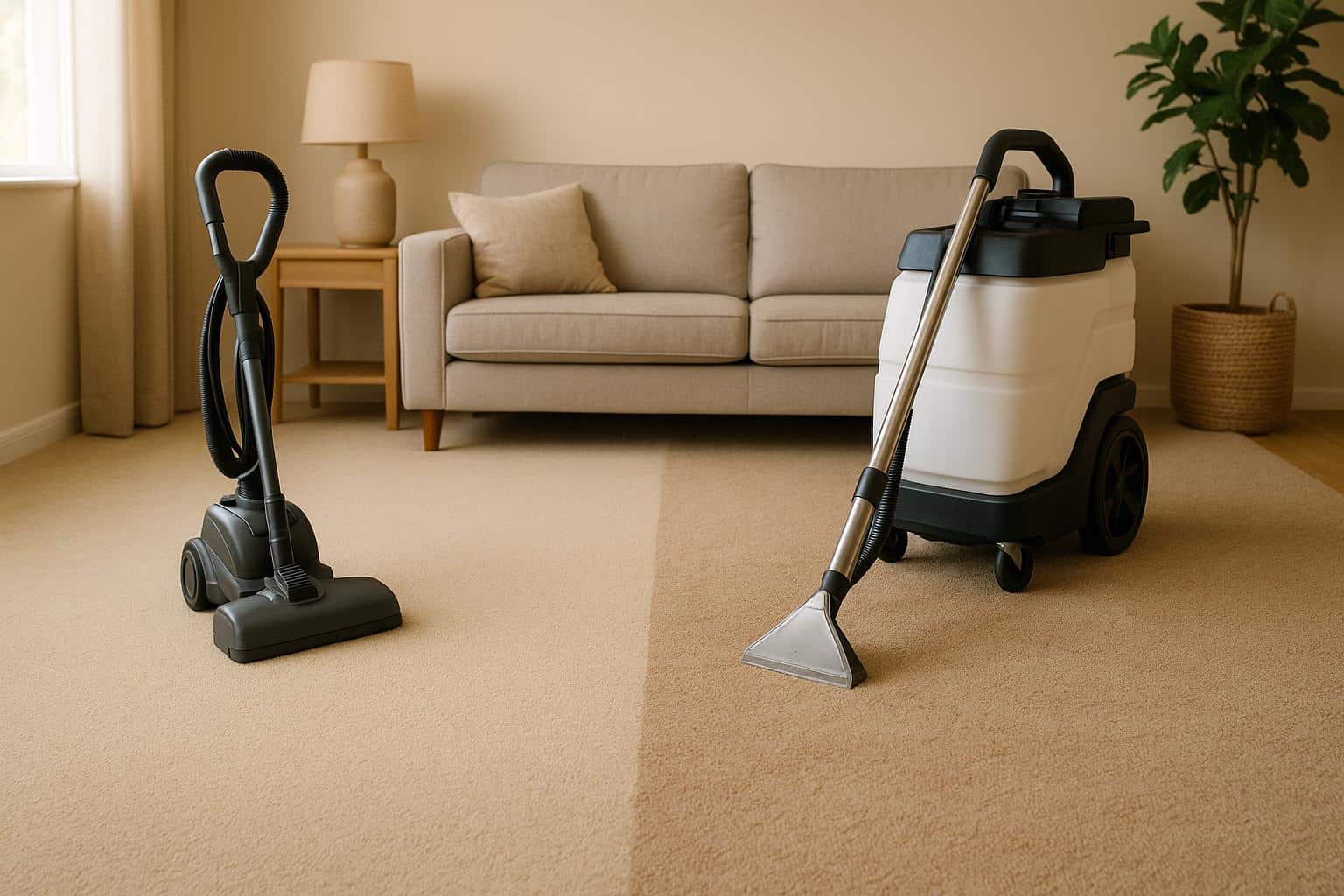
Want cleaner carpets but unsure whether to DIY or hire a pro? Here’s the bottom line:
- Professional carpet cleaning costs more upfront ($120–$400 for standard homes) but delivers deeper cleaning, extends carpet life, and maintains warranties.
- DIY cleaning is cheaper ($50–$200 per session) and great for routine upkeep, but it’s less effective for deep stains or allergens and risks damage if done improperly.
Quick Overview:
- Professional Cleaning: $0.25–$0.50 per sq. ft. or $125–$250 for 1-3 rooms. Ideal for deep cleaning, stain removal, and high-traffic areas.
- DIY Cleaning: $30–$125 per day for equipment rentals + $20–$50 for cleaning solutions. Best for surface cleaning and small stains.
Quick Comparison Table:
| Criteria | Professional Cleaning | DIY Cleaning |
|---|---|---|
| Cost | $120–$400 per service | $50–$200 per session |
| Cleaning Depth | Deep fiber penetration | Surface-level cleaning |
| Time Commitment | 1–2 hours (500 sq. ft.) | 6+ hours (includes setup) |
| Drying Time | 6–12 hours | 12–24 hours |
| Carpet Lifespan Impact | Extends by up to 50% | Higher risk of damage |
| Warranty Compliance | Maintains warranty | May void warranty |
Takeaway: Use DIY for quick touch-ups, but invest in professional cleaning every 12–18 months for long-term savings and healthier carpets.
DIY vs. Professional Carpet Cleaning: What You Need to Know
Initial Costs: Professional vs DIY
Hiring professionals for carpet cleaning often comes with a higher price tag due to the use of commercial-grade equipment and specialized techniques. On the other hand, opting for a DIY approach can be more budget-friendly, relying on equipment rentals and store-bought cleaning solutions.
Professional Service Prices
Professional carpet cleaning costs typically fall between $0.25 and $0.50 per square foot. For room-based pricing, here’s what you can expect:
- Single room (12′ x 12′): $100 to $150
- Two rooms: $75 to $100 per room
- Three rooms: $65 to $75 per room
Most companies have a minimum service fee, usually around $100 to $150, even for smaller spaces. Additional charges may apply for extra services, such as:
- Pet stain removal: $30–$50 per hour
- Furniture moving: $10–$50 per item
These extras can quickly add to the overall cost.
DIY Equipment and Supply Costs
If you’re handling the cleaning yourself, you’ll need to account for equipment rentals and cleaning supplies. Here’s a breakdown of common costs:
- Rug Doctor rentals at Lowe’s: $39.99 for 24 hours or $49.99 for 48 hours
- Upholstery and stair cleaning tool rental: $5.99 for either 24 or 48 hours
- Cleaning solutions: $20 to $50 per bottle
These costs provide the foundation for comparing DIY expenses across different home sizes.
Price Comparison Chart
Here’s a quick look at how the initial costs stack up for professional services versus DIY options, based on home size:
| Service Type | Small Home (500 sq ft) | Medium Home (800 sq ft) | Large Home (1,200 sq ft) |
|---|---|---|---|
| Professional | $125–$250 | $200–$400 | $300–$600 |
| DIY Basic* | $65–$85 | $85–$105 | $105–$135 |
| DIY Deep Clean** | $95–$125 | $125–$155 | $155–$195 |
*Includes 24-hour equipment rental and standard cleaning solution
**Includes 48-hour rental, premium cleaning solution, and additional tools
While DIY cleaning is generally cheaper, costs can climb if you need multiple rentals or specialized stain treatments. Professional services, though pricier upfront, often deliver a more thorough and hassle-free experience, which might be worth considering for long-term results.
Next, we’ll dive into how these methods compare in cleaning effectiveness and overall results.
Equipment Power and Results
Now that we’ve taken a look at costs, let’s dive into the performance and results of professional cleaning equipment versus DIY options.
Professional Cleaning Power
Professional-grade equipment is built for efficiency and effectiveness, leveraging advanced technology like 500 psi water pressure, dual-stage vacuum motors with 150 inches of water lift, heated water systems, and counter-rotating brushes to protect carpet fibers while delivering a deep clean.
For instance, the Whittaker Smart Care® TWIN PRO 15" can clean up to 2,640 square feet per hour, showcasing the speed and thoroughness that professional machines bring to the table.
| Cleaning Aspect | Professional Equipment | DIY Equipment |
|---|---|---|
| Drying Time | 6-12 hours | 12-24 hours |
| Cleaning Depth | Deep fiber penetration | Surface-level cleaning |
| Water Temperature | Adjustable heated system | Limited heating |
| Suction Power | 150" water lift, 92 CFM | Lower |
| Coverage Rate | Up to 2,640 sq ft/hour | 400-600 sq ft/hour |
Clearly, professional equipment is designed to handle demanding cleaning tasks with greater precision and efficiency. But how does DIY equipment compare?
DIY Equipment Capabilities
DIY carpet cleaners are more accessible but come with notable limitations. These machines are primarily built for surface-level cleaning and lack the pressure, suction, and heating power of professional tools. Standard brushes on DIY machines often struggle to remove deeply embedded dirt and grime.
Some of the key drawbacks include:
- Struggles to eliminate allergens and bacteria buried deep in carpet fibers.
- Weaker suction, which can lead to longer drying times – potentially creating a breeding ground for mold.
- Limited heating and pressure, making it difficult to tackle tough, set-in stains.
For households with specific needs – like kids, pets, or allergy sufferers – these limitations can make a big difference. Professional cleaning doesn’t just make carpets look better; it can extend their lifespan by up to 50%. Plus, the enhanced cleaning power of professional equipment helps maintain better indoor air quality and a healthier home environment.
When you weigh the performance differences, it’s easy to see why professional services, despite their higher upfront costs, often provide better long-term value through superior carpet care.
Time Requirements
Time is a crucial factor when deciding between professional and DIY carpet cleaning.
DIY Time Commitment
Cleaning carpets yourself involves more than just the actual cleaning – it comes with a handful of extra tasks that can add up quickly:
| Task | Estimated Time |
|---|---|
| Setting Up & Learning | 15–30 minutes |
| Moving Furniture | 5–30 minutes |
| Pre-vacuuming | 10–15 minutes |
| Cleaning Each Room | 30–60 minutes |
| Drying Time | 6–24 hours |
For a standard-sized room, the cleaning itself usually takes 30–60 minutes. If you’re tackling larger areas, like a ballroom, you might spend 2–4 hours actively cleaning. And if you’re new to this, you’ll also need to spend time learning how to operate the machine, mix the cleaning solutions properly, and troubleshoot any issues that come up.
On the other hand, professional cleaners bring expertise and efficiency to the table, making the process much quicker.
Professional Service Duration
Professional carpet cleaners can handle about 500 square feet in just 60–90 minutes. This includes everything – setup, moving furniture, pre-treating stains, the main cleaning, and any post-cleaning treatments. Plus, they use advanced drying methods that remove moisture more quickly, so your carpets are ready to use sooner.
This streamlined approach not only saves time but also reduces the hassle, making professional services a convenient option for busy households or larger spaces.
sbb-itb-401327a
Long-term Costs and Risks
Carpet Life Expectancy
With proper care, carpets generally last between 5 and 15 years, though high-quality materials like wool can stretch that lifespan to as much as 25 years. Regular professional cleaning plays a key role in this longevity, as it helps preserve the carpet’s condition and reduces the need for frequent replacements. By extending the life of your carpet and minimizing upkeep, professional cleaning becomes a practical long-term choice.
DIY Risk Factors
Cleaning your carpets yourself might seem like a cost-effective option, but it comes with its fair share of risks that could end up costing more in the long run:
- Over-wetting can encourage mold growth.
- Using the wrong cleaning solutions may damage fibers or cause discoloration.
- Inadequate rinsing often leaves residue that attracts dirt.
- Improper use of equipment can lead to uneven wear.
These pitfalls underscore the value of professional cleaning, which uses certified techniques to achieve better results while safeguarding your carpet and your wallet.
Insurance Coverage
Professional cleaning services offer more than just clean carpets – they also provide financial peace of mind. Since January 2008, major carpet manufacturers like Shaw, Mohawk, and Beaulieu have required homeowners to use IICRC-certified professional cleaners to maintain their warranties. For instance:
"Professional service must be performed by an IICRC Certified Firm. Shaw warranties require that the homeowner be able to show proof of periodic cleaning by an IICRC certified cleaning professional."
Additionally, professional cleaning services often include insurance coverage to protect against unexpected issues like accidental property damage, chemical mishaps, water damage, or equipment failures. Together, warranty compliance and insurance coverage offer a safety net, reducing the financial burden of unforeseen problems and making professional care a smart investment for the long haul.
Choosing Your Cleaning Method
Deciding between DIY and professional carpet cleaning comes down to understanding your specific needs and priorities. Both approaches have their strengths, depending on the situation.
Best Times for DIY
DIY carpet cleaning works well for simpler, day-to-day tasks like:
- Tackling surface dirt and routine cleaning
- Removing small, fresh stains
- Maintaining low-traffic areas
- Managing costs with a budget-friendly option
Typically, DIY cleaning costs range between $50 and $200.
When to Hire Professionals
For more challenging situations, professional cleaning is the way to go. Their specialized tools and techniques are ideal for:
- Deep-set stains caused by wine, pet accidents, or grease
- High-traffic areas that require thorough extraction
- Removing allergens for improved indoor air quality
- Addressing water damage effectively and safely
Professional-grade equipment can heat water to 160–230°F, which significantly enhances the ability to remove tough stains.
Situation Guide
Here’s a quick reference to help you decide which method fits your needs:
| Scenario | Method | Why |
|---|---|---|
| Annual Deep Clean | Professional | Helps extend the life of your carpet |
| Fresh Coffee Spill | DIY | Stops stains from setting quickly |
| Pet Odor Treatment | Professional | Requires advanced solutions and deep extraction |
| Pre-Move Out | Professional | Increases your chances of getting your deposit back |
| Monthly Maintenance | DIY | A budget-friendly way to maintain cleanliness |
| Post-Flooding | Professional | Ensures proper water removal and prevents damage |
For the best results, consider combining both methods. Use DIY cleaning regularly for surface maintenance, and schedule professional cleanings periodically to tackle deep-seated dirt and extend your carpet’s lifespan. While professional services may cost $120–$400 upfront, they can save you money in the long run by delaying the need for a costly carpet replacement and keeping your floors in top shape.
Conclusion: Cost vs Value
When weighing the costs of carpet cleaning, it’s crucial to think beyond the upfront price tag and consider the overall value each method delivers. While DIY cleaning might seem like the cheaper option at first, repeated attempts and the possibility of damaging your carpet can add unexpected expenses over time.
Professional services, which typically cost between $120 and $230 for a standard home, offer several advantages that go beyond just cleaning:
| Value Factor | Professional Cleaning | DIY Cleaning |
|---|---|---|
| Carpet Lifespan | Helps maintain and protect | Higher risk of wear and damage |
| Cleaning Depth | Removes deeply embedded dirt | Limited to surface cleaning |
| Time Investment | Quick and efficient | Time-consuming |
| Equipment Quality | Uses industrial-grade machines | Relies on basic rental tools |
Richard Turner from the Carpet and Rug Institute highlights a key concern with DIY cleaning:
"If all the soapy residue is not extracted, you can expect your carpet to be sticky or stiff and resoil rapidly".
DIY cleaning is best suited for routine maintenance and handling small stains. However, professional cleaning, with its advanced equipment and expertise, ensures a deeper clean and better long-term results. To strike the right balance, consider scheduling professional cleanings every 12–18 months while reserving DIY efforts for spot treatments. This approach helps maximize both cost efficiency and the longevity of your carpets.
FAQs
How often should I get my carpets professionally cleaned to protect their lifespan and warranty?
To maintain your carpets and keep your warranty intact, scheduling professional carpet cleaning every 12 to 18 months is a smart move. This routine tackles the dirt, allergens, and stains that vacuuming just can’t reach, helping your carpets look better and last longer.
In fact, many carpet manufacturers make professional cleaning within this timeframe a requirement for honoring warranty terms. So, take a moment to review your carpet’s care instructions. Regular cleanings not only safeguard your investment but also make your home feel cleaner and more welcoming.
What are the risks of cleaning carpets yourself, and how can you avoid them?
DIY carpet cleaning might seem like a simple task, but it comes with its fair share of risks. Using the wrong techniques or products can damage carpet fibers, leave stubborn stains behind, or even result in mold growth if too much water is applied. On top of that, choosing the wrong cleaning solution can discolor or weaken the material, potentially shortening the carpet’s lifespan.
To minimize these risks, stick to the care instructions provided by the manufacturer and use cleaning products specifically designed for your carpet type. Be mindful of how much water you use – over-wetting can lead to moisture issues – and make sure the carpet dries thoroughly. If you’re unsure about tackling the job yourself, hiring a professional can be a smart move to ensure your carpets are cleaned safely and effectively without compromising their quality.
Is hiring a professional carpet cleaner worth the cost compared to doing it yourself?
Professional carpet cleaning may come with a higher upfront cost than DIY approaches, but it often pays off in the long run. While renting equipment or purchasing cleaning supplies might seem like a budget-friendly option, using the wrong techniques or subpar tools can actually harm your carpets, potentially leading to costly repairs or replacements later.
Professionals bring advanced equipment and expert methods to the table, ensuring a deep clean that effectively removes dirt, allergens, and bacteria. This not only helps your carpets last longer but also boosts indoor air quality, making your home a healthier place to live. Plus, trained cleaners understand how to treat various carpet materials, minimizing the risk of damage that can occur with do-it-yourself efforts.
Choosing professional cleaning services is an investment that helps protect your carpets and keeps them looking and feeling fresh for a longer time.
Related Blog Posts
- Carpet vs Hardwood: Best Flooring for Colorado Homes
- Air Duct Cleaning Cost Guide: What to Expect
- 10 Tips to Extend Your Carpet’s Lifespan
- Emergency Water Damage: First 24 Hours Response Guide


